
“Extreme heat is rewriting the script, in many ways, on agriculture.” — Kaveh Zahedi, FAO Assistant Director General and Director of the Office of Climate Change, Biodiversity and Environment
By Marco Lopez
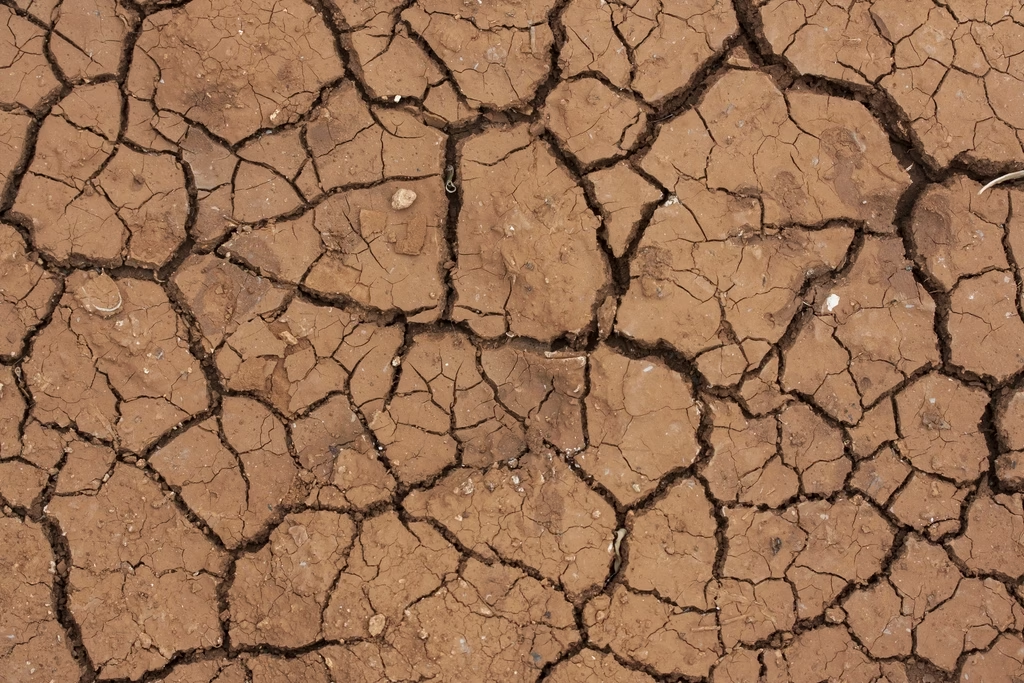
A new joint report by the Food and Agriculture Organization (FAO) and the World Meteorological Organization (WMO) finds that extreme heat is severely impacting global food and farming systems, with half a trillion work hours projected to be lost each year.
“Extreme heat is increasingly defining the conditions under which agrifood systems operate,” said WMO Secretary-General Celeste Saulo, warning that it acts “as a compounding risk factor that magnifies existing weaknesses across agricultural systems.”
Crops, livestock, fisheries and forests are all being impacted by heatwaves and prolonged periods of high day and night temperatures. FAO Director-General Qu Dongyu calls extreme heat a “major risk multiplier” that is “exerting mounting pressure on crops, livestock, fisheries, forests and the communities and economies that depend upon them.”
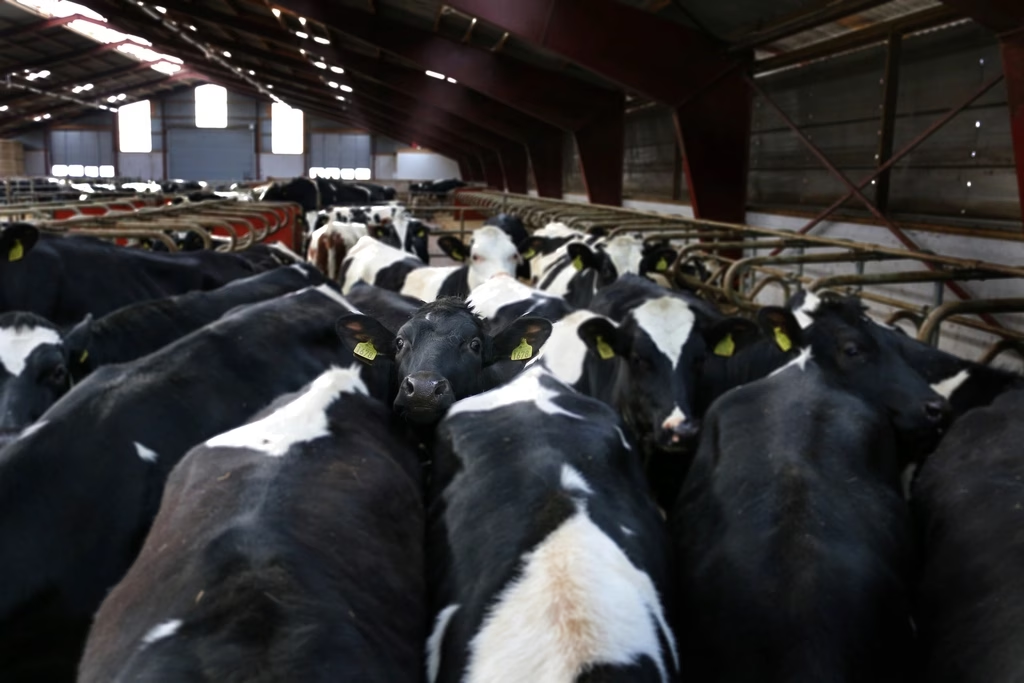
For major crops, yields begin to decline above 30 degrees Celsius (86 degrees Fahrenheit), weakening plant structure and reducing productivity. For livestock, heat stress sets in at even lower temperatures. “Particularly pigs and poultry, which cannot cool themselves efficiently, resulting in reduced growth, lower dairy yields and, in severe cases, organ failure,” the report states.
The toll on human labor is also pronounced. In parts of Latin America, the number of days too hot to work could rise to 250 per year — a particular strain on crop sectors that still rely on human harvesters, such as the sugarcane industry. The report calls for urgent adaptation measures, including heat-resilient crops, adjusted planting schedules and improved farm management practices to safeguard food systems, along with early warning systems and access to financial support such as insurance and social protection to help farmers cope with rising risk.
In the ocean, marine heatwaves continue to threaten life underwater. The report notes that 91% of global oceans have experienced at least one heatwave since 2024. Globally, the frequency of marine heatwaves has approximately doubled since the 1980s, according to the Intergovernmental Panel on Climate Change, and they have become more intense, longer-lasting and wider in coverage.
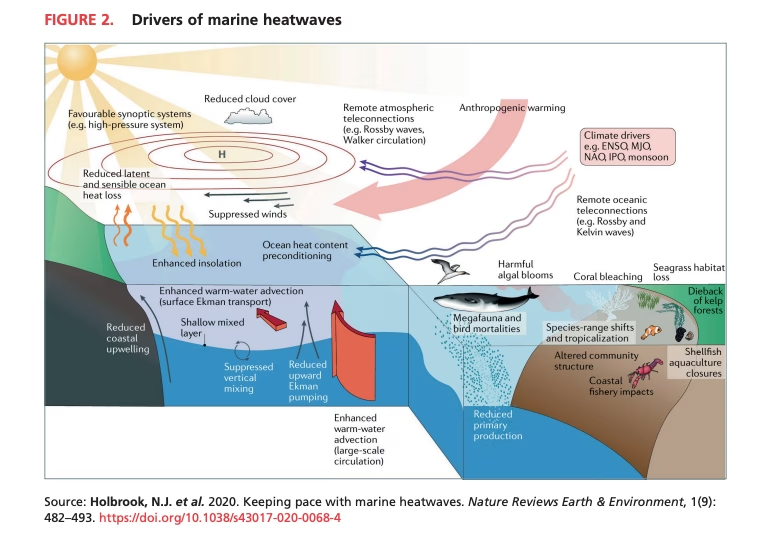
Extreme heat also amplifies the global trend of ocean deoxygenation. Heat triggers changes in water chemistry that can cause extreme low-oxygen events, or hypoxia. From the perspective of fisheries and aquaculture, the impact of higher temperatures on dissolved oxygen is among the most consequential changes underway. As water warms, it holds less oxygen due to changes in gas solubility. High sea surface temperatures also increase thermal stratification within the water column, reducing mixing between warm upper and cool lower layers — leading to further oxygen loss and drastic changes in ocean and marine health.
In forests, Latin America saw a 240% increase in the rate of forest cover loss in recent years, making it the second most affected region globally for forest cover loss acceleration. The report explains that extreme heat harms forests primarily through moisture stress. In high temperatures, trees lose moisture rapidly through transpiration while soil moisture is simultaneously depleted, leaving trees vulnerable to xylem cavitation — when air bubbles enter tree sap, causing cellular and leaf damage. Tree mortality typically results from the compound effect of heat and drought together, and extreme heat also makes trees more susceptible to insect pest attacks and disease.
In the Amazon, the feedback loop between exposed soils and background warming has been found to increase local warming effects by over 300% — a factor of four — due to varying levels of forest cover loss, with effects extending up to 100 kilometers from deforested areas. When forest is lost, bare soil radiates heat rather than dissipating it through moisture evaporation, driving further heat stress on remaining forest. Deforestation and extreme heat amplify each other.
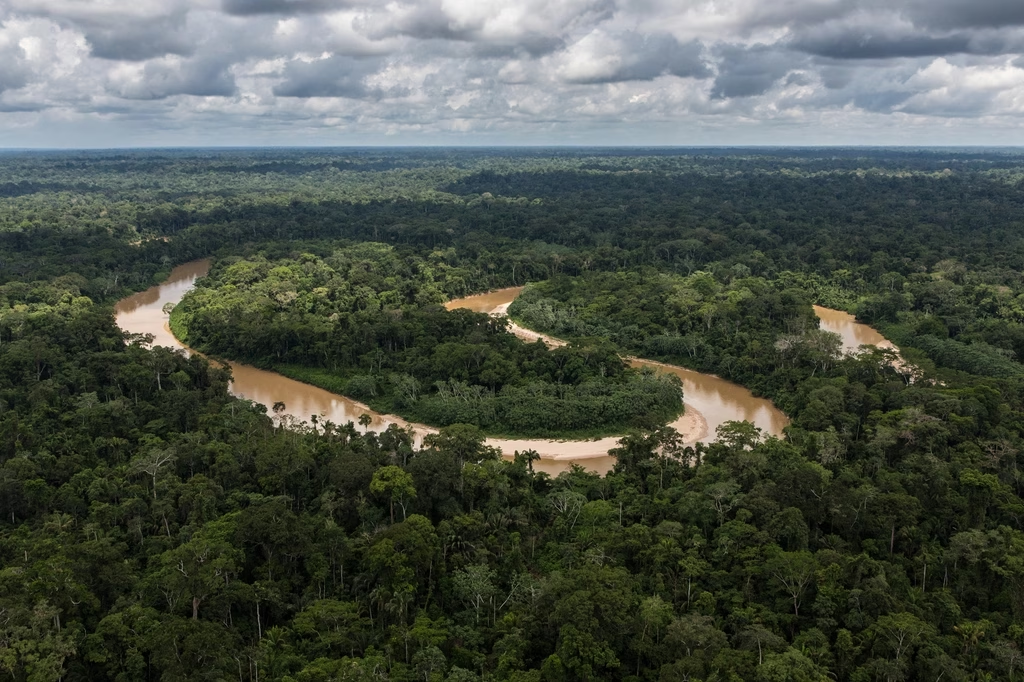
“In the tropics, forests are projected to transition from moist to dry forest types as temperatures rise,” the report states. “Combined with the increasing frequency of compound hot-dry events, this fundamentally alters forest composition and function.”
The UN agencies say a decisive transition away from a high-emissions future is required to protect agriculture and global food security. The report notes that supporting food security for all is the most crucial of the Sustainable Development Goals. As of 2024, 8% of the world’s population still faced hunger. That same year, 2.3 billion people experienced moderate to severe food insecurity, and nearly one-third of the world’s population could not afford a healthy diet, according to the FAO.